


Profile
■Brief Introduction
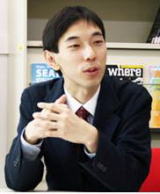
Dr. Shin'ichiro (Shin) Ishikawa is Professor of Applied Linguistics at the School of Languages & Communication, Kobe University, Japan. His research interests cover corpus linguistics, statistical linguistics, TESOL, and SLA. He has published many academic papers and books on branches of applied linguistics. He is a leader in the ICNALE learner corpus project.
Curriculum Vitae
Shin’ichiro ISHIKAWA
Kobe University
1-2-1, Tsurukabuto, Nada-ku, Kobe, Japan
iskwshin@kobe-u.ac.jp
https://www.researchgate.net/profile/Shinichiro_Ishikawa
■Education
Okayama University. Ph.D. in English Literature (2004)
Kobe University. MA in English Literature (1994)
Kobe University. BA in English Literature (1992)
■Current Academic Position
Full Professor of Institute for Promotion of Higher Education/ Graduate School of Intercultural Studies/ Center of Mathematics and Data Sciences, Kobe University
■Previous Academic Positions
2013- Current: Professor, Kobe University
2001-2013: Associate Professor, Kobe University
2001-2004: Assistant Professor, Hiroshima International University
1999-2001: Assistant Professor, Shizuoka Prefectural University
1994-1999: Part-time Instructor, University of Marketing and Distribution Sciences
■Awards
2013 JAECS (Japan Association of English Corpus Studies) Academic Award
2012 CELES (Chubu English Language Education Society) Academic Award
2008 JACET (Japan Association of College English Teachers) Academic Award
2008 JASELE (Japan Society of English Language Education) Academic Award
■External Research Grant
2017-2019 MEXT/JSPS KAKENHI Grant (Kiban B: 17H02360)JPY 17,030,000
2015-2017 MEXT/JSPS KAKENHI Grant (Hoga: 15K12909) JPY 3,380,000
2013~2015 MEXT/JSPS KAKENHI Grant (Kiban B: 25284104) JPY 17,030,000
2012~2014 MEXT/JSPS KAKENHI Grant (Hoga: 24652120)JPY 3640,000
2010-2012 MEXT/JSPS KAKENHI Grant (Kiban B: 22320104)JPY 16,770,000
2007-2009 MEXT/JSPS KAKENHI Grant (Young Scholar Fund B: 19720135)JPY 3,410,000
2005-2007 MEXT/JSPS KAKENHI Grant (Young Scholar Fund B: 17720135) JPY 2,700,000
■Current Professional Activities
Japan Association of College English Teachers, Executive Board Member
Japan Association of English Corpus Studies, Executive Board Member
Japan Association of Stylistics, Executive Board Member
Association for Japanese and English Language and Culture, Executive Board Member
Mathematical Linguistic Society of Japan, Executive Board Member
■Peer Reviewer for Academic Journals and Publishers
Natural Language Engineering (CUP), Language & Speech (SAGE), Journal of Mathematical Linguistics, JACET Journal, Lexicography Asialex Journal (Springer), Proceedings of Learner Corpus Research, Journal of the Japan Society of English Language Education
■Recent Invited Talks and Keynote Speeches
National Conference of the Japan Association of English Corpus Studies (2017), National Conference of the Japan Association for Language and Technology (2018), International Conference of Oriental COCOSDA (International Committee for the Co-ordination and Standardisation of Speech Databases and Assessment Techniques) (2018), Japan Association of Language Teachers (JALT) Vocabulary SIG National Conference (2018), Special Lecture at Kochi University (2018),
■Graduate Supervisions at Kobe University
2012 Ph. D. (Applied Linguistics/ Corpus Linguistics)
2013 Ph. D. (Applied Linguistics/ Corpus Linguistics)
2016 Ph. D. (Applied Linguistics/ Corpus Linguistics)
2006 MA (Applied Linguistics/ Corpus Linguistics)
2008 MA (Applied Linguistics/ Corpus Linguistics)
2009 MA (Applied Linguistics/ Corpus Linguistics)
2010 MA (Applied Linguistics/ Corpus Linguistics)
2010 MA (Applied Linguistics/ Corpus Linguistics)
2012 MA (Applied Linguistics/ Corpus Linguistics)
2012 MA (Applied Linguistics/ Corpus Linguistics)
2013 MA (Applied Linguistics/ Corpus Linguistics)
2014 MA (Applied Linguistics/ Corpus Linguistics)
2015 MA (Applied Linguistics/ Corpus Linguistics)
2016 MA (Applied Linguistics/ Corpus Linguistics)
2017 MA (Applied Linguistics/ Corpus Linguistics)
2018 MA (Applied Linguistics/ Corpus Linguistics)
■Thesis Supervision Committee Members at Other Universities (Invited)
2018 Ph. D. (Kumamoto University)
2017 Ph. D. (GC University, Faisalabad, Pakistan)
2013 Ph. D. (Tokyo University of Foreign Studies)
2014 MA (National Singapore University)
■Publications
Books (Single Authored) 4
Books (Co-authored/ Edited/ Co-edited) 9
Books Chapters 21
Reviewed Articles 47
Invited Articles 22
Articles 85
Teaching Materials 24
Book Translations 6
Technical Report 37
____________________
Total 256
■Major Publications (Books)
English Corpora Under Japanese Eyes (Rodopi, 2004), English Lexicography in Japan (Taishukan, 2006), Corpus, ICT, and Language Education (University of Strathclyde Publishing, 2010), Corpora and Language Technologies in Teaching, Learning and Research (University of Strathclyde Publishing, 2011), English Corpus and Language Education (Taishukan, 2006), An Introduction to Corpus Linguistics (Hitsuji, 2012), Corpus Studies for Japanese Language Education (Kuroshio, 2012), An Introduction to Applied Linguistics: Acquisition, Processing, Learning, Teaching, and Assessing of Second Language (Hitsuji, 2017).
■Graduate Courses Taught at Kobe University
Corpus Linguistics
Applied Linguistics
Statistical Linguistics
■Undergraduate Courses Taught at Kobe University
Foreign Language Teaching Methodology
English Communication
Data Sciences
